Manhattan Real Estate Tracker has learned that Avi Hiaeve, the founder and CEO of the luxury timepiece and jewelry firm Avi & Co., purchased the former Playboy Club building at 5 East 59th Street at a foreclosure auction. The bid was approximately $26.7 million. The previous investors had purchased the property for $85 million.
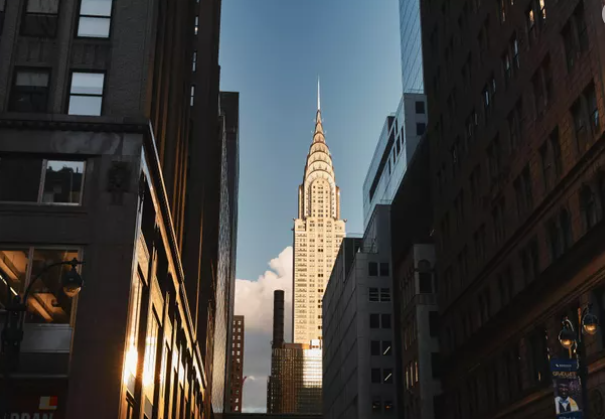
The Chrysler Building is attempting to reposition itself by marketing to high-end retail tenants.
The iconic Chrysler Building has signed its first tenant following a retail makeover that aims to bring an air of modern luxury into the challenged art deco landmark.
WatchHouse, a British coffee shop that recently opened its first U.S. store at 660 Fifth Ave., will open its second location at the base of the Chrysler Building. It signed a lease for 2K SF on 43rd Street, across from an entrance to Grand Central Terminal.
Retail by Mona CEO Brandon Singer, who led broker teams that represented the tenant and landlord RFR, said the lease reflects the vision for the building’s retail.
“It’s creating a destination for retail that is a little bit outside of the box, given the amazing asset,” Singer told Bisnow. “With all the dense office buildings in this area, this will help the people coming back to work. Give them an experience that they may not have had in the past.”
As tenants opt for amenity-rich, Class-A towers, owners of historic buildings like the Chrysler Building are attempting to find a role for their properties to play in a remote work world.
Singer’s team is marketing several spaces on the 1,046-foot-tower’s ground floor, in addition to storefronts on the arcade level, which totals 30K SF alone. RFR is also considering adding retail use to the second floor.
It is reinventing the Cloud Club lounge on the 61st and 62nd floors as part of a renovation that RFR co-founder Aby Rosen told Bloomberg in 2020 would cost at least $200M.
“We wanted to create something nice — food, wine, dry cleaning, shavers, hairdressers — so tenants have a reason to stay longer instead of running out,” Rosen told Bloomberg at the time.
Singer declined to provide further details on the building’s upgrades. RFR declined to comment.
The Chrysler Building previously housed retail tenants that served daily Midtown commuters, including a barbershop, a shoeshine, a dry cleaner, a locksmith and an optometrist — but all of them vacated in 2020. In its next chapter, the building will focus on higher-end tenants that could appeal to shoppers outside of the 9-to-5 work schedule, Singer said.
Most recently, the building, once the world’s tallest, has been caught in the collapse of Austrian property company Signa. The firm, founded by investor René Benko, filed for insolvency in November, and it is looking to unload its 50% stake in the skyscraper.
Rosen had been in talks to renegotiate the building’s long-term ground lease with The Cooper Union since he and Signa acquired the leasehold in 2019. Signa’s insolvency complicated those efforts, and RFR is on the hook for more than $31.5M in annual ground rent payments, the New York Post reported in November.
The Chrysler Building’s retail repositioning is similar to that of its rival Empire State Building. Empire State ownership added a three-story Starbucks Reserve store to its retail base in 2022. In 2019, it debuted a $165M redevelopment, which added a museum and made improvements to its observatory.
Empire State Realty Trust, the owner of the Empire State Building, said in its annual report that the observatory generated $129.4M in revenue, a sixth of the REIT’s total from last year. The 91K SF of retail in that building was 76.4% leased at the end of 2023.
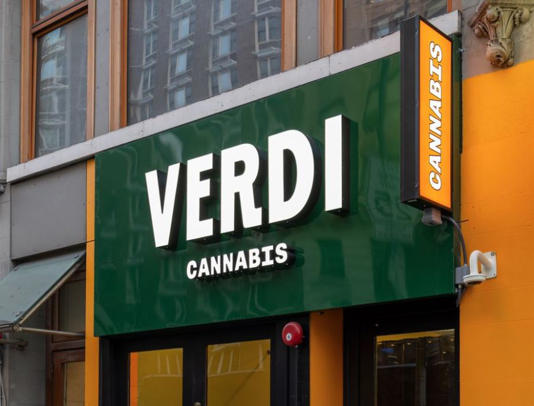
Verdi Cannabis, the first legal recreational weed dispensary in Chelsea, will officially open on Friday.
Verdi will be located at 158 W 23rd St., between Sixth and Seventh avenues in Manhattan.
Father-and-son duo Mitchell and Ellis Soodak are the owners of Verdi, which will sell state-regulated marijuana products.
“Our dispensary will stand out because of our knowledgeable and educated budtenders sell tested and regulated cannabis, as well as providing a safer option for consumers,” Ellis Soodak said.
Verdi will be open from 9 a.m. to 11 p.m., Monday to Saturday, and from 10 a.m. to 10 p.m. on Sundays.
A grand opening ceremony will be held at 11 a.m. on Friday.
“Verdi represents a new era for cannabis enthusiasts in Chelsea,” Ellis Soodak said. “Our goal is for Verdi to be more than just a dispensary as we aim to be a critically important community alternative to the illicit cannabis establishments that have saturated the Chelsea area.”
The Travel Agency: A Cannabis Store is in line to be the first cannabis retail brand in New York State with multiple locations, as the legal-cannabis business starts gaining a foothold over illegal shops.
Separately, Curaleaf Holdings Inc. said it received special-use approval to open its first New York adult-use store, which will be located in Newburgh, a city about 70 miles north of New York City.
Curaleaf planned to kick off delivery service from the location this past weekend, with a soft opening by the end of January, pending state approval. New York-based Curaleaf has been providing cannabis to the medical market since 2017.
Curaleaf’s stock rose 7% on Friday. The shares are up by 23.5% in the past year, compared to a 37.4% rise by the Nasdaq
New York State’s legal-cannabis business is speeding up after a slow start due to some headwinds, including the cost of real estate and competition from literally thousands of unlicensed stores hawking unregulated cannabis products.
New York’s licensed-cannabis market generated only $150 million in sales in its first year of operation in 2023, less than the $274 million generated by the smaller state of Connecticut, which also kicked off adult-use sales about a year ago.
Gov. Kathy Hochul plans to propose legislation to crack down further on unlicensed cannabis shops. She’s also including a cannabis potency tax repeal and replacing it with a weight-based tax to “ease tax compliance” for distributors.
Hochul’s proposal comes mirrors a proposal in the state legislature to scrap the potency tax in favor of a 9% wholesale excise tax.
The idea is that cutting some cannabis taxes may lower the cost at the cash register and make legal pot more competitive with unregulated pot being sold in unlicensed stores.
Paul Yau, founder of the Travel Agency, said the effort by the state to cut taxes and close down unlicensed shops marks a positive move for the business.
“We 100% support trying to get rid of illicit stores,” Yau told MarketWatch, noting that Hochul made “having safe, tested, clean products” a priority by including a mention in her state-of-the-state address.
Cannabis companies have been slow to open for a variety of reasons. If a major bank holds a mortgage on a property, it may not allow a cannabis business to be a tenant because pot remains illegal under federal law.
Cannabis company operating expenses remain high because of these and other obstacles, he said.
Meanwhile, The Travel Agency is readying its second store at 118-122 Flatbush Avenue, near the Barclays Center in downtown Brooklyn, close to major public-transportation routes.
“We’re looking to make this the premier dispensary in Brooklyn,” Yau said.
The stores will initially open as a pop-up with 3,500 square feet, with 60 full-time and part-time workers, and then expand to 4,800 feet.
While adult-use cannabis has been approved since 2021, legal shops have been slow to gear up as the state awarded its first licenses to non-profits and people affected by the War on Drugs.
Travel Agency runs its two stores for license holders The Doe Fund in Manhattan and GMDSS LLC in Brooklyn.
The Travel Agency’s flagship store opened a year ago under the name Union Square Travel Agency just south of Union Square in Manhattan as the third overall retail cannabis shop in the state.
Now, the Travel Agency name will be used for both the original Union Square store and its downtown Brooklyn location, under a re-branding effort.
In November, the state also officially sanctioned its existing medical-use licensees to take part in the recreational market.
Those companies include Columbia Care, Curaleaf Holdings Inc., Etain, Nycanna LLC, PharmaCann and Valley Agriceuticals LLC
Companies with an existing presence in the state’s medical program include Curaleaf Holdings, RIV Capital Inc. Green Thumb Industries Inc. and privately held PharmaCann.
WeWork was once valued at $47 billion. Now, the office-sharing company is in the throes of the bankruptcy process after its Monday filing. It has about $16 billion in long-term leases, which the company has been renegotiating. (Other than being the latest buzzy company to fall from grace, WeWork has been a key client for commercial real estate landlords already struggling with an inconsistent return-to-office patterns due to Covid.) The move plunged WeWork into a troubling new chapter of its staggeringly sharp and quick downfall, which was already fodder for a miniseries starring Jared Leto as founder Adam Neumann. For his part, Neumann, who stepped down as CEO in 2019 and received hefty payouts, called the bankruptcy filing “disappointing.”
Shane’s Rib Shack closed earlier this year at 673 Ninth Avenue. The for lease sign has recently come down so perhaps the space has been leased. This space has changed hands frequently in the past five years or so.
By Lois Weiss, NY Post, Published Oct. 27, 2023, 8:57 a.m. ET
Storefronts from Soho to the Upper East Side dazzle as tenants race to gobble up space around Gotham.iStockphoto/AFP/Getty Images
Not only has the retail apocalypse caused by the pandemic passed, Manhattan has rebounded so fast that prime locations are becoming hard to find.
“Retail is on fire,” said Eric Le Goff of Retail by Mona. “From Meatpacking to Williamsburg, all these areas are on fire.”
In recent years, rents on upper Madison Avenue between 59th Street and 86th Street had fallen into the $600s per foot. Now, a bevy of 75 transactions have pushed rents back toward $1,000 per foot.
The most recent lease was with Dolce & Gabbana which snagged a 23,338-square-foot former Hermès women’s store at 693 Madison Ave. after the other retailer moved down the block to the larger 706 Madison Ave. last year.
Additionally, Sotheby’s will take over the former Whitney Museum in the Breuer building at 945 Madison, adding new life to that stretch.
“There is a reduced amount of inventory,” said Matthew Krell of Alvarez & Marsal Property Advisor
Both Madison and Fifth avenues are going through many store changes
Dolce & Gabbana will move to the former Hermès space on Madison.
The opening of Tiffany & Co.’s redevelopment will allow its sister LVMH brand, Louis Vuitton, to move into the former Nike space to its east that Tiffany had occupied during its renovation.
Louis Vuitton will develop a new tower at 1 E. 57th St. and engulf 743 Fifth Ave., now occupied by brand cousin Hublot, sending it into the market to seek a new spot.
Gucci has renewed its large store on the Fifth Avenue base of Trump Tower. Swarovski is opening soon at 680 Fifth. Rolex is building its own tower at 665 Fifth Ave., while Marc Jacobs will take over the former Armani X on the north corner of East 51 Street at 645 Fifth Ave.
The Gucci store at the base of Trump Tower on Fifth.
The area closer to 42nd Street is lagging, however, due to numerous big-box storefronts.
One problem for the entire retail market is that it takes so long to get deals done.
“You may have an agreed-upon term sheet, but you are not getting someone swinging hammers for a year,” said Matthew Chmielecki of CBRE. “The least scientific way to measure a market is to count empty storefronts.”
Fun new spaces like Electric Shuffle are opening.
For instance, a new 10,000-square-foot deal in the base of the Virgin Hotel will bring Electric Shuffleboard to the city next spring.
John Few, of SRS Real Estate Partners, represented the concept.
“It has a very well-thought-out food and beverage program and will be good for dates and corporate events,” said Adam Weinblatt of Newmark who, along with Richard Tang of the Lam Group, represented the hotel, which has already scored a winner with Swingers minigolf.
In Noho, the 32,400-square-foot former Showfields space on Lafayette Street is up for grabs with Retail by Mona. Its asking rent is $3.5 million.
Across Lafayette, hip sneaker company Kith expanded into a big footprint.
“It’s madness with tons of people,” said Brandon Singer of Retail by Mona. “It’s like an upscale Times Square as it’s slammed and they’re not just looking, but shopping.”
On Broadway and on other Soho streets, many shops are preparing for their openings next spring while Meatpacking continues to see commitments by both luxury automakers and luxury retailers.
A revived five-building retail corridor is luring top brands to Gansevoort Row.
Saint Laurent, for instance, signed a 13,000-square-foot lease at 70 Gansevoort St., part of the Aurora Capital Associates and William Gottlieb Real Estate street revival.
“It’s full of energy and that neighborhood has transformed over the last five years,” said Adam Henick of Current Real Estate. “Gansevoort Row is beautiful with busy restaurants and popular retailers.” However, Times Square is still suffering despite lots of foot traffic.
“Not only have some of the large boxes sat vacant because it’s hard to find the right user, but the challenges the city has undergone the last few years have not helped,” said Henick.
The 245,000-square-foot retail in the base of the former New York Times building is in receivership, although the huge Bowlmor on West 44th St. is open, as is Los Tacos No. 1.
“Larger tenants are looking at it,” said Chmielecki, the agent for the block. “It’s hard to overstate the excitement in the retail market.”
Medical-MJ firms — who were the first in the state authorized to peddle any cannabis — just slammed the Hochul administration for blocking them from selling to all adult consumers.Shutterstock
As New York’s legal-cannabis rollout continues to stumble, it grows ever more obvious that the decision-makers were all far more focused on scoring symbolic points than on silly things like actually making it work.
The companies already OK’d to sell medical marijuana could have led the way to broader pot sales; instead, they got shut out.
Rather than pursuing its legislated mandate to develop licensing, regulations and guidelines for the sale of legal weed products, the state’s Office of Cannabis Management focused on a social-equity agenda by prioritizing applicants who had prior drug convictions.
Medical-MJ firms — who were the first in the state authorized to peddle any cannabis — just slammed the Hochul administration for blocking them from selling to all adult consumers.
“OCM has ignored the collective wisdom of every other state with an adult-use cannabis program — most recently Maryland — to permit existing medical operators to stand up the adult-use market,” the companies wrote in an Aug. 31 letter to Gov. Kathy Hochul.
Of course, the gov’s brain trust at OCM also shut out the veterans that the law also directed them to prioritize for licenses; that’s led to a lawsuit that has all licensing on hold.
Meanwhile, OCM’s slow start in licensing anyone at all has led to just 23 licensed dispensaries open across the whole Empire State.
For Maefield Development’s 20 Times Square, a $900 million CMBS debt has been moved to a specific servicer.
According to Commercial Observer, the loan went into special servicing on November 3 after defaulting as a result of a $26.8M lien filed against the property.
The 42-story building, commonly known as 701 Seventh Avenue, has four deals that make up the loan’s remaining balance. The development of a hotel at the mixed-use property and numerous foreclosures are apparently the causes of the liens.
A 452-key Marriott International hotel called 20 Times Square briefly opened in August 2019; its shutdown a year later was blamed to the pandemic.
According to The Real Deal, the loan was initially provided to Maefield by the French bank Natixis in 2018 with a May 2023 maturity date. According to Commercial Observer, the property’s 99-year ground lease, revenue from the hotel, the four floors of retail space, and electronic billboards in Times Square all acted as collateral.
The National Football League had a 43K SF experiential store in the area that shuttered in 2018, not long after it had opened, and it was intended to be the property’s retail anchor. According to Commercial Observer, the NFL’s rent at the time of the underwriting would have been $8.25M annually.
Maefield’s lease on its own building was pledged as collateral when Natixis financed the deal for Maefield and Fortress Investment Group to buy out its investors and acquire full ownership of the property in 2018. However, Natixis and a group of foreign investors foreclosed on the property when Maefield and Fortress missed payments on their leasehold debt. The lender selected SL Green to oversee the 350K SF building at auction this year with plans to reopen the hotel wing of the structure.
According to information from the Korea Herald, a group of lenders, including institutional Korean investors and Korean banks KB Kookmin, Hana, and NH Nonghyup, are owing roughly $150M in mezzanine debt on the property.
Numerous marijuana dispensaries might not learn whether they can start operations in New York for at least another two weeks.
In the courtroom, four veterans contended that state legislation had not been followed when evaluating their applications for cannabis licenses. One of the categories given higher consideration by state authorities when deciding whether to provide a cannabis license is veterans. The state Office of Cannabis Management, or OCM, prioritizes people with prior marijuana convictions in New York over veterans, though. All of these soldiers have perfect records.
The state organization in charge of issuing licenses is OCM. The state lawmakers simply authorized guidelines for conditional licenses, the assistant attorney general said in court on behalf of OCM, and left it up to OCM to decide how licenses are actually awarded. The judge said the two sides must cooperate to ensure that no one is harmed by the license application procedure but refrained from rendering a decision.
Spectrum News reported that Hal McCabe, the Cannabis Association of New York’s interim executive director, released a statement in which he expressed disappointment with the court’s decision today and stated that “this injunction continues to threaten tens of thousands of jobs, thousands of businesses, and the entire industry as a whole.”
He stated, referring to corporate cannabis companies, “It really is them and their interests against the entire New York State licensed marijuana cannabis market.” That’s how easy it is. Right now, we are experiencing a true David and Goliath moment right now.”.